Stop tracking deadlines.
Start knowing your next move.
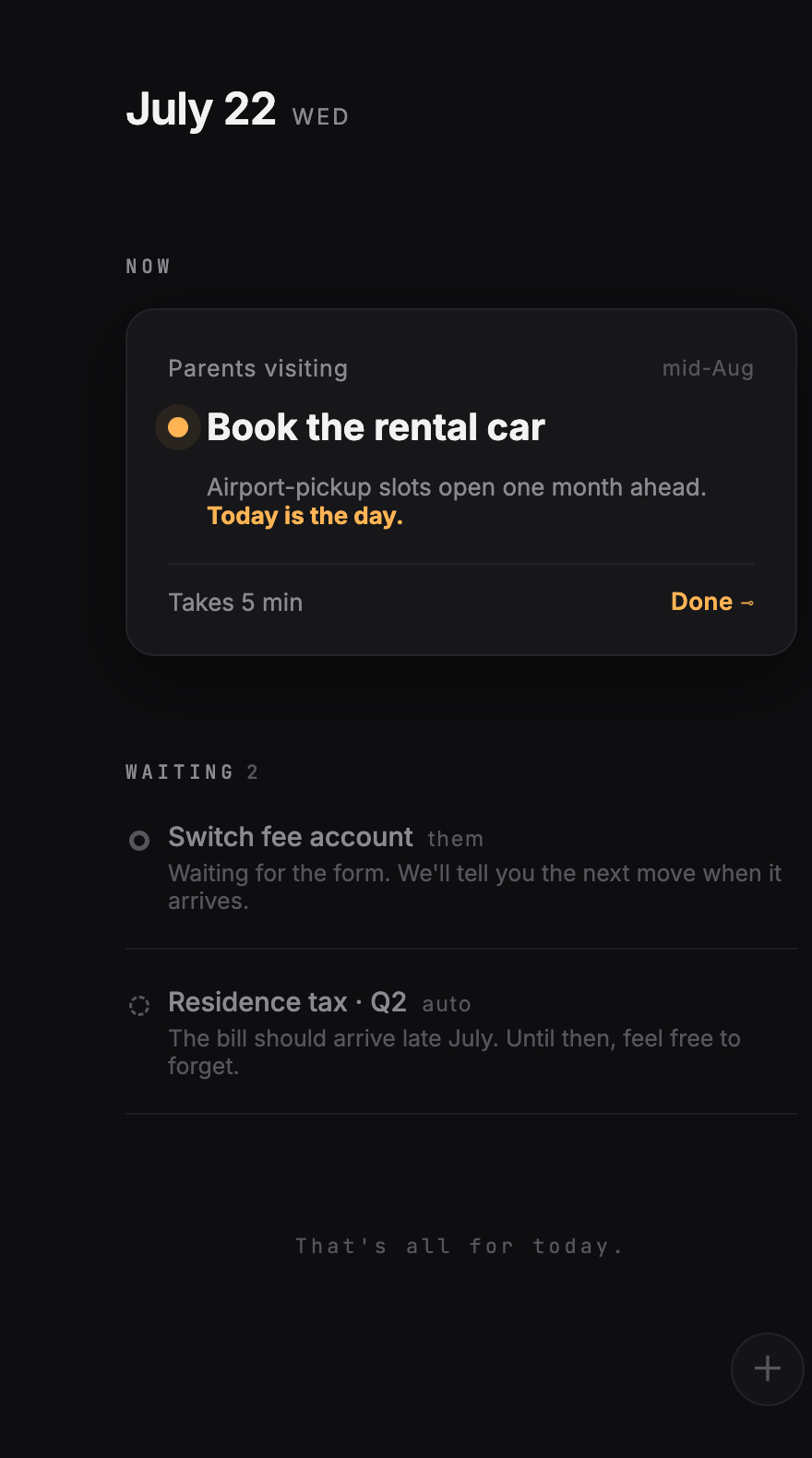
Japan's paperwork has hidden rules — renew your Myna card, and your inkan registration quietly dies. Tsugi shows every procedure's state — your move / waiting on them / on watch — with the next step, and the follow-ups nobody tells you about. Zero manual input.
Sound familiar?
- You went to city hall for an inkan certificate — and learned your registration card died when you renewed your Myna card. Nobody told you.
- You keep a mental countdown for your visa and your Myna card and the tax bill that arrives “sometime in June.” Your brain is the tracking system.
- You left a job, started another, and still aren't sure: were you supposed to enroll in NHI for that gap month? You'll find out at visa renewal.
- You asked online: “Is there a trusted tool for this, or do I just cobble together calendars and spreadsheets?” — and everyone said: spreadsheets.
How Tsugi works
Tsugi means “next.” That's all the app shows you.
- 01
States, not checkboxes. Every procedure is your move, waiting on them, or on watch. Open the app: only what needs you today is lit. Everything else, you're allowed to forget.
- 02
Zero input. Tsugi already knows Japan's procedures — the deadlines, the documents, the offices, the order. Tell it “I'm changing jobs,” and the tasks unfold themselves, back-calculated to the day you should act.
- 03
Hidden chains, surfaced. Myna renewal → inkan re-link. Leaving Japan → the bank account you forgot. The follow-ups nobody mentions, shown before they become problems.
One missed residence-tax bill can cost you thousands of yen in surcharges. A pension gap can complicate a visa renewal. Tsugi exists so that never happens — insurance that costs less than a coffee.